indie.biz
indie.biz Press

Press Kit

Unfinished Business

A New Story for a New Era of Human Flourishing

Capitalism isn’t dying—it’s unfinished. A brisk, bracing call to build a prosperous, vibrant, and just economy—available for pre-order now, on sale June 15, 2026.

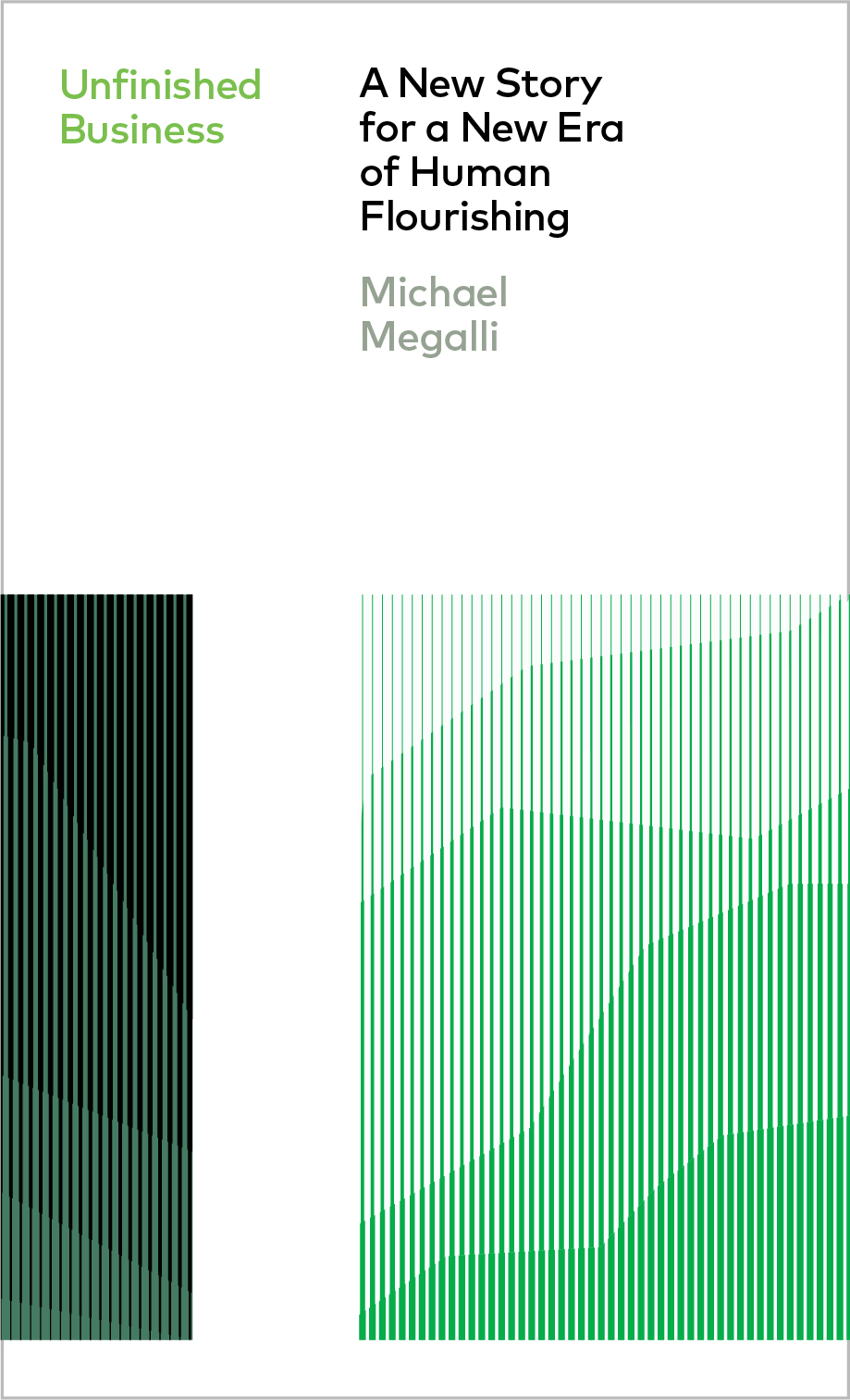
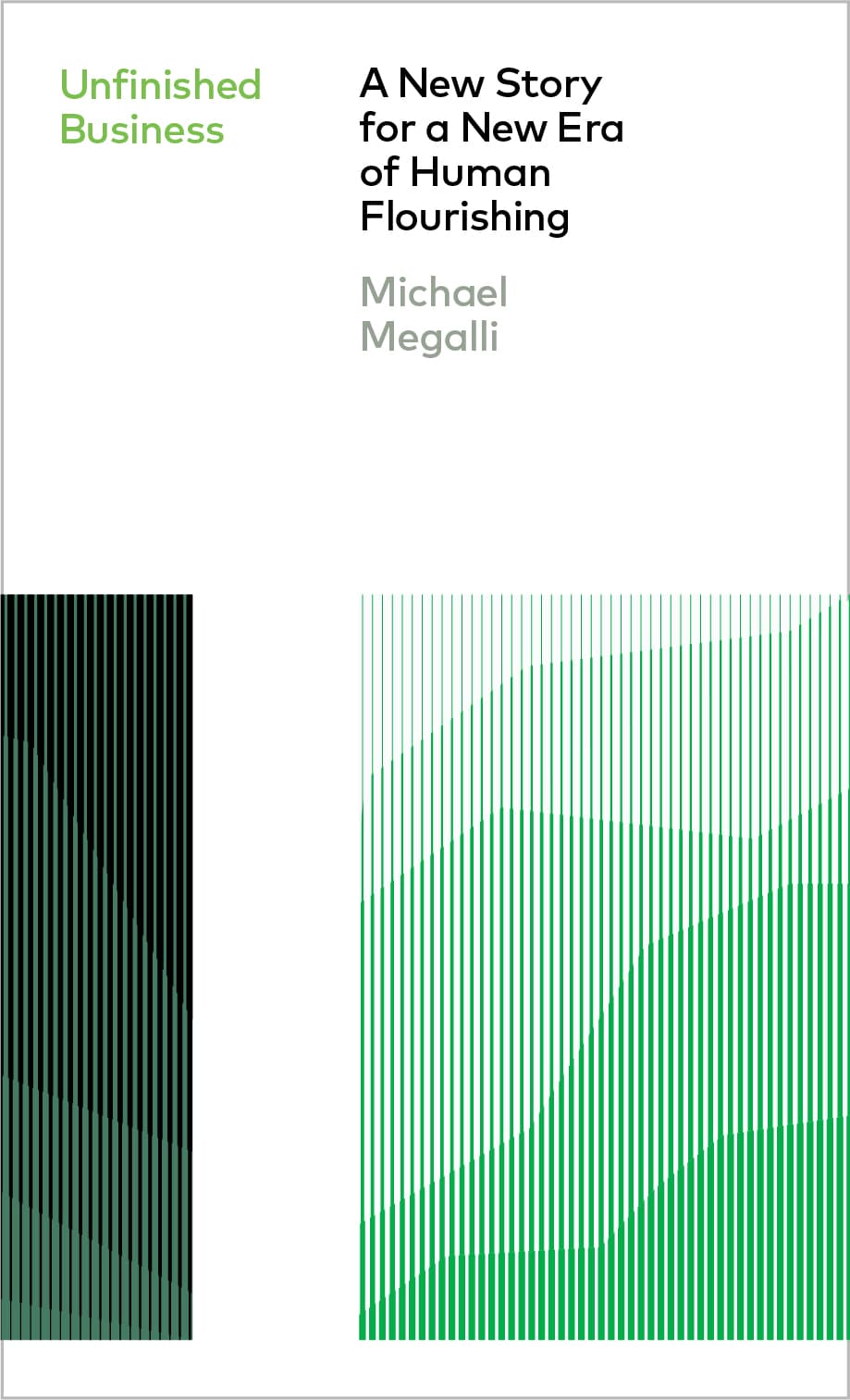
Cover of Unfinished Business by Michael Megalli
Cover art by Ed O’Brien
01

The book at a glance

Title
Unfinished Business: A New Story for a New Era of Human Flourishing
Author
Michael Megalli
Publisher
indie.biz Press
On sale
June 15, 2026 (available for pre-order now)
Format
Paperback (4.25″ × 7″, 232 pages) + Kindle eBook
Price
$15.95 paperback / $9.99 Kindle
Print ISBN
979-8-9956343-0-0
Kindle ISBN
979-8-9956343-1-7
Categories
Economic Conditions · Capitalism · Entrepreneurship
02

About the book

We are stuck between two stories about capitalism—a story of exploitation and a story of liberation. But neither story on its own can propel us forward to a new conception of what our economy can be and who it can be for.

So many of us are convinced that this is what life in “late-stage capitalism” is destined to be—and that if we just wait, something better is coming. But what if the frustration so many people feel isn’t a death rattle? What if it’s a growing pain?

Unfinished Business makes a bracing case that capitalism isn’t dying—it’s unfinished. The real economic story of our time isn’t decline. It’s the gap between the prosperous, vibrant, just economy that’s possible and the corporatist one we’ve inherited.

Drawing on a wide range of thinkers—from Jonathan Haidt and Virginia Postrel to Peter Drucker and David Smick—Michael Megalli offers a different way to see, name, and act on the world we actually live in. He shows why the dominant stories about capitalism keep failing us, why young people in particular are right to be frustrated, and why the work of building something better is more open and more urgent than we’ve been led to believe.

This is a book for anyone who senses that our economic future isn’t fixed—and that the next chapter is ours to write.

03

About the author

Michael Megalli

Michael Megalli has spent twenty-five years in branding and entrepreneurship, working with some of the biggest companies in the world and some of the smallest. He teaches Entrepreneurial Marketing at the University of Washington’s Foster School of Business, runs the strategic brand consultancy Djinn Dept, and founded indie.biz, a platform for people building independent businesses. He lives in Seattle.

04

Key messages

The four ideas the book is built to land—and the frame Michael keeps returning to in conversation.

1.

We’re stuck between two stories—and we need a third.

One story says capitalism is exploitation and decline. The other says it’s liberation and progress. Both contain real truth, which is exactly why we’re paralyzed—every argument dead-ends in the same fight. The book’s move isn’t to pick a side. It’s to validate what people are actually feeling and then point past the standoff to a third story: the economy isn’t finished, and that’s the opening.

2.

The provocation: what if this is early-stage capitalism?

“Late-stage capitalism” is the phrase of the moment—and it gets the timeline backward. What we have is corporatist and unfinished, built out from the top down and waiting to be built out from the bottom up. Calling it early-stage isn’t optimism for its own sake. It’s a more demanding claim, because it puts the work on us rather than on history.

3.

Young people are right to be frustrated—and right to build.

The book was written for people who feel the system isn’t working for them and aren’t wrong about it. The argument doesn’t ask them to settle. It says the most radical thing they can do isn’t to wait for collapse or rescue—it’s to participate, broadly and entrepreneurially, in finishing the thing.

4.

The human advantage in an age of AI.

As more cognitive work is automated, the distinctly human capacities—judgment, alertness, the ability to see what’s missing and act—become more economically valuable, not less. The book argues this is a reason for urgency and for hope, and a large part of what makes broad participation possible now.

05

Suggested interview questions

Ready to use as-is, or as a jumping-off point.

01

You open by saying we’re trapped between two stories about capitalism. What are they—and why does being stuck between them leave us paralyzed?

02

The claim at the center of the book is that this isn’t late-stage capitalism—it’s early-stage. What do you mean by that?

03

You say young people are right to be frustrated. What is the system actually getting wrong for them—and why isn’t the answer to tear it down?

04

What is the “third story,” and how is it different from both the critique and the cheerleading we usually hear?

05

You draw on an unusually wide range of thinkers—Haidt, Postrel, Drucker, Smick. What’s the through-line that connects them for you?

06

The book talks about a “demand-side revolution.” Most economic conversation is about supply, policy, big institutions. What changes when you start from ordinary people instead?

07

There’s a chapter called “The Human Advantage.” In an age of AI, what’s the human capacity you think matters most economically?

08

A lot of books diagnose what’s broken. You seem more interested in what’s possible. Why that emphasis—and what does building actually look like for a regular person?

09

What’s one thing someone listening right now could do differently after finishing this book?

10

You teach this to college students. What do they grasp immediately that older audiences sometimes resist?

06

Advance praise

“Megalli has translated the case for Main Street capitalism into a story young people will actually hear. What we call ‘late-stage capitalism’ is actually early-stage—and the way forward is a bottom-up entrepreneurial revival that ordinary people themselves can build. Honest, urgent, and full of practical hope.”
David Smick, author of The Great Equalizer
07

Selected writing

“The American Brand Is in Crisis. It’s Up to All of Us to Fix It,” The Hill (2024).

A parallel argument in a different register: America, like the economy, has never been a finished project—its promise is built from the bottom up, by individuals coming together rather than waiting on leaders from the top down.

08

Cover art & contact

Cover art & assets

Cover and interior illustrations by Ed O’Brien. High-resolution cover image and author photo available on request; three cropped part-divider images are also available for editorial and social use.

Cover imageHigh-res JPEGDownload
Author photoHigh-res headshotOn request →
Part-divider imagesThree cropped, editorial & socialOn request →

Booking & media